> ## Documentation Index
> Fetch the complete documentation index at: https://docs.tagada.io/llms.txt
> Use this file to discover all available pages before exploring further.
# Open-Source Plugin Examples
> Five production-ready checkout plugins — fork, study, or ship as-is. 100% MIT.
# Open-Source Plugin Examples
Everything on this page is **real code in a real GitHub repo**, not pseudo-snippets.
Clone it, run `pnpm dev`, read the source, swap the branding, or ship it verbatim.
All five examples live in a single monorepo under the MIT license. Star it, fork it, send PRs.
***
## Plugin SDK vs. Headless SDK — quick primer
Before you fork anything, make sure you're looking at the right tool for the job:
**`@tagadapay/plugin-sdk/v2`** — a full React framework for building **hosted checkout, upsell, and thank-you pages** that TagadaPay serves from your own domain. Handles sessions, funnel state, payments, pixels, i18n, drafts, build mode, etc.
Use when you want a **full checkout experience** we host and route for you.
**`@tagadapay/headless-sdk`** — framework-agnostic TypeScript client for calling the TagadaPay API from **your own storefront** (Shopify theme, Next.js app, Nuxt, etc.).
Use when you already have a frontend and just need to create checkouts, fetch orders, or track pixels.
The five examples below all target the **Plugin SDK**. Each is a complete, deployable TagadaPay plugin.
***
## The Five Style Variants
Same behavior, same SDK hooks, same `plugin.manifest.json` structure — only the **visual system** changes.
Use them as starting points to understand how far the Plugin SDK's theming layer lets you push a single checkout design.
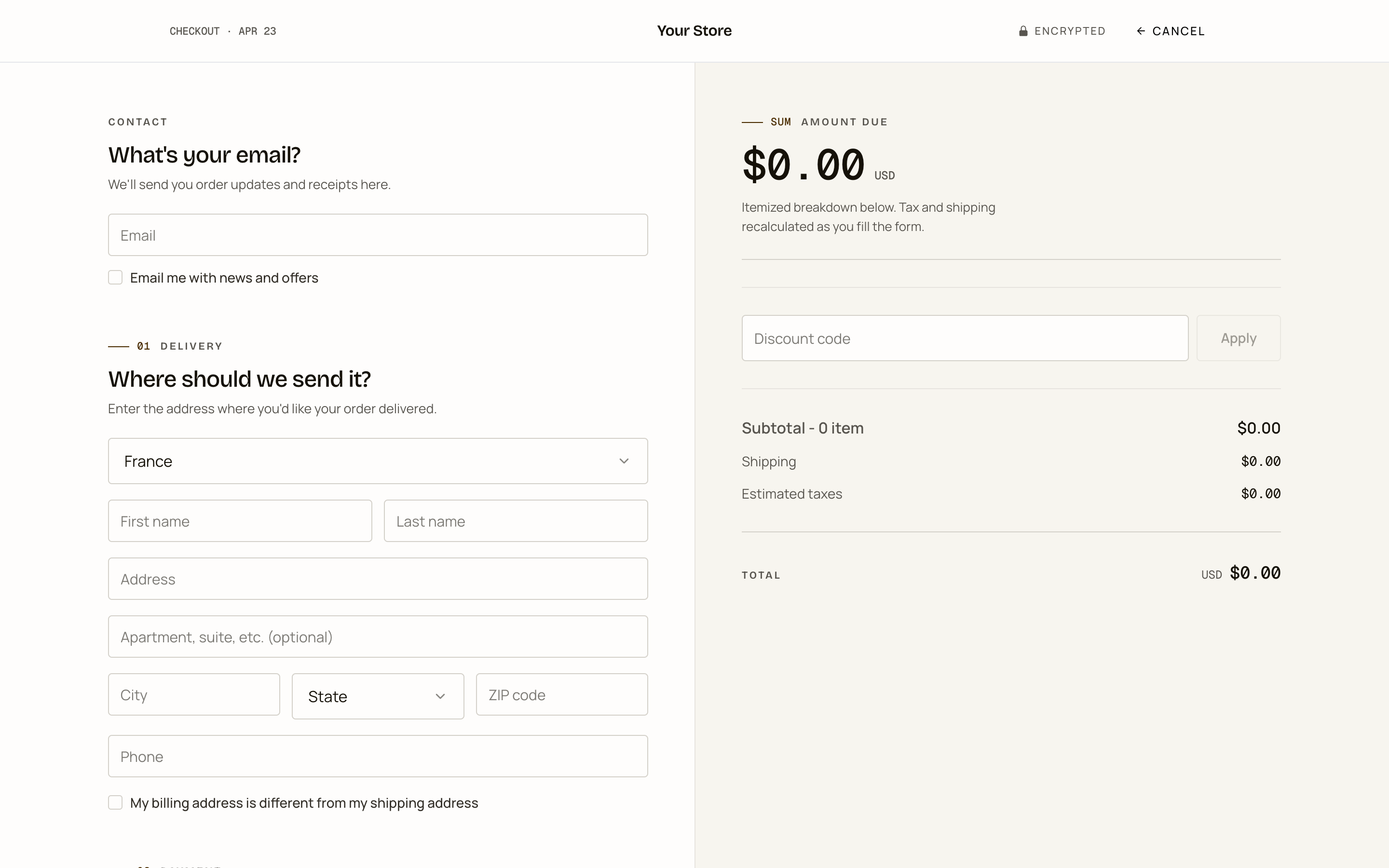
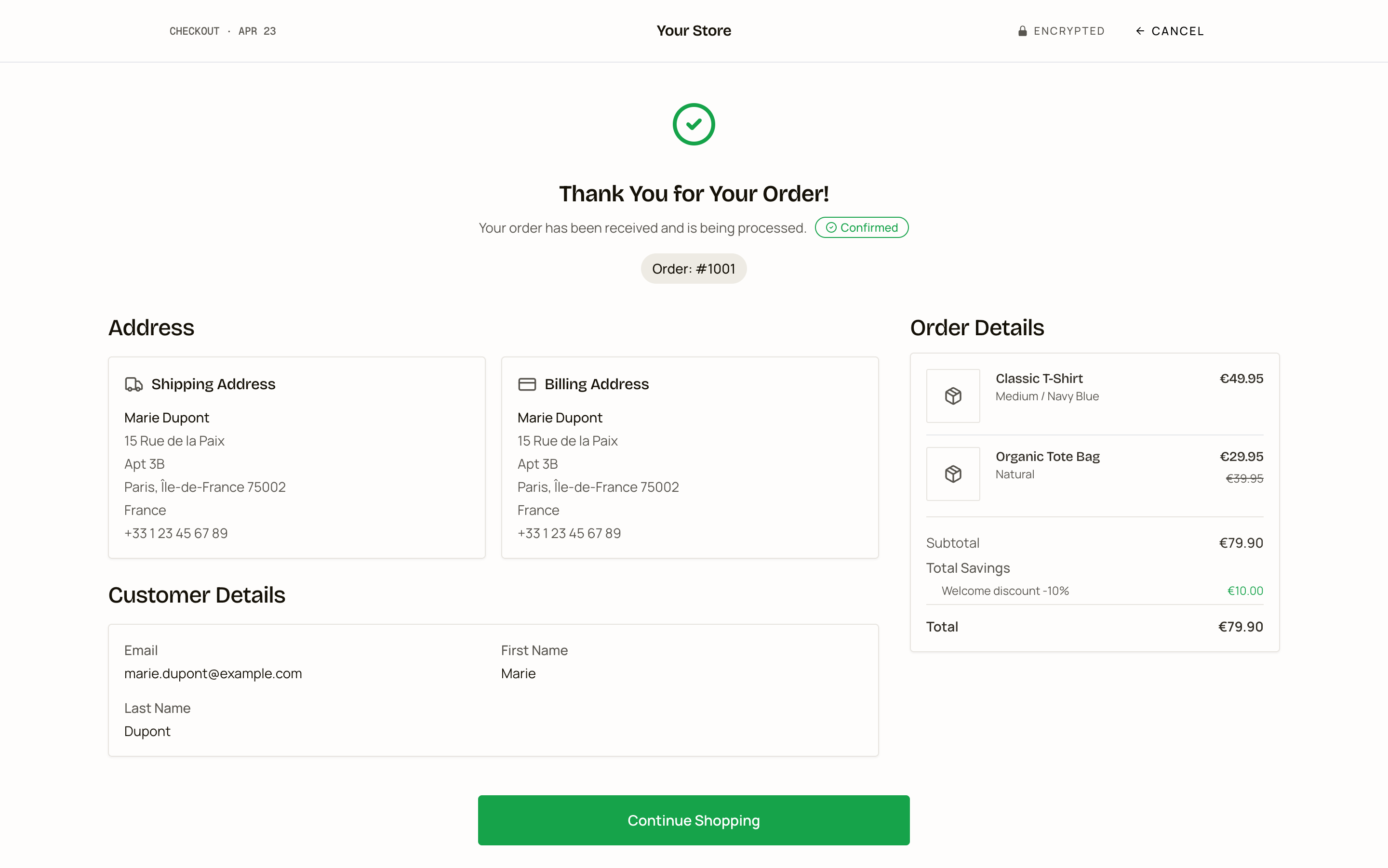
[**Source →** `simple-checkout-style-editorial`](https://github.com/TagadaPay/plugins/tree/main/simple-checkout-style-editorial)
Clean magazine aesthetic — generous whitespace, restrained typography, editorial hierarchy.
Best starting point if you want a neutral, trustworthy checkout.
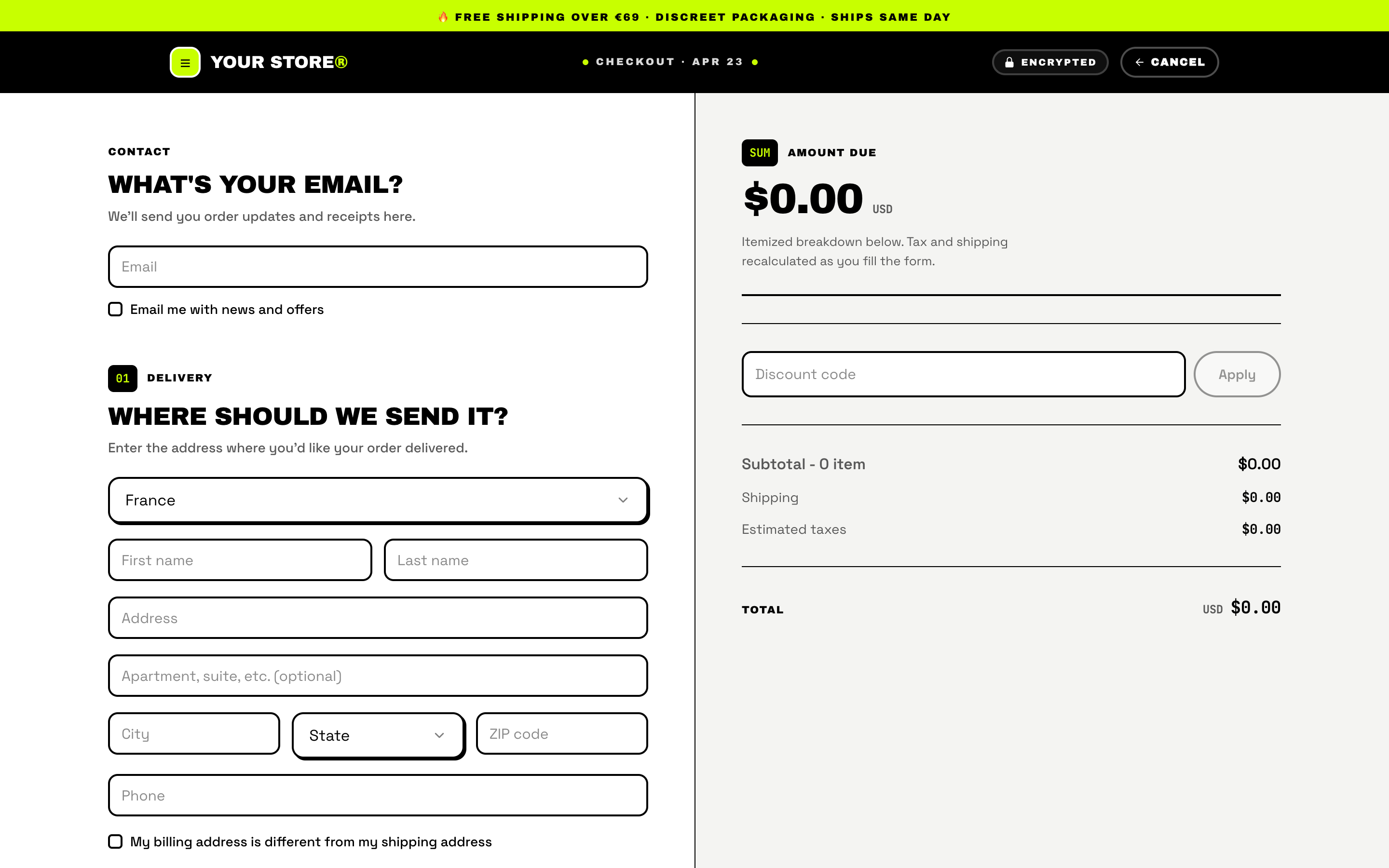
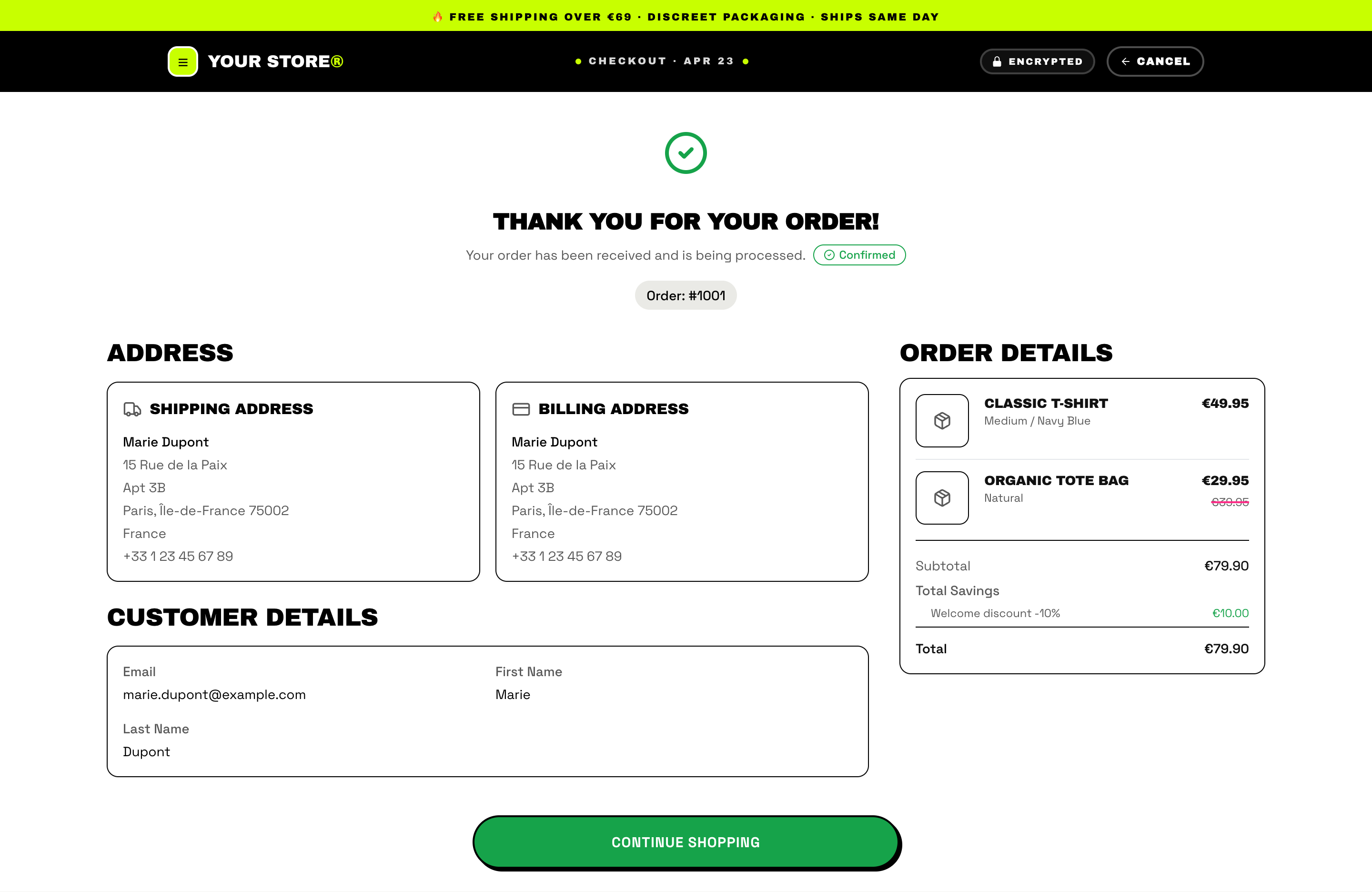
 [**Source →** `simple-checkout-style-neon`](https://github.com/TagadaPay/plugins/tree/main/simple-checkout-style-neon)
Bold neon-on-black aesthetic — high-contrast UI, fluorescent accents, uppercase display type.
Good fit for streetwear, apparel, and youth-targeted DTC.
[**Source →** `simple-checkout-style-neon`](https://github.com/TagadaPay/plugins/tree/main/simple-checkout-style-neon)
Bold neon-on-black aesthetic — high-contrast UI, fluorescent accents, uppercase display type.
Good fit for streetwear, apparel, and youth-targeted DTC.
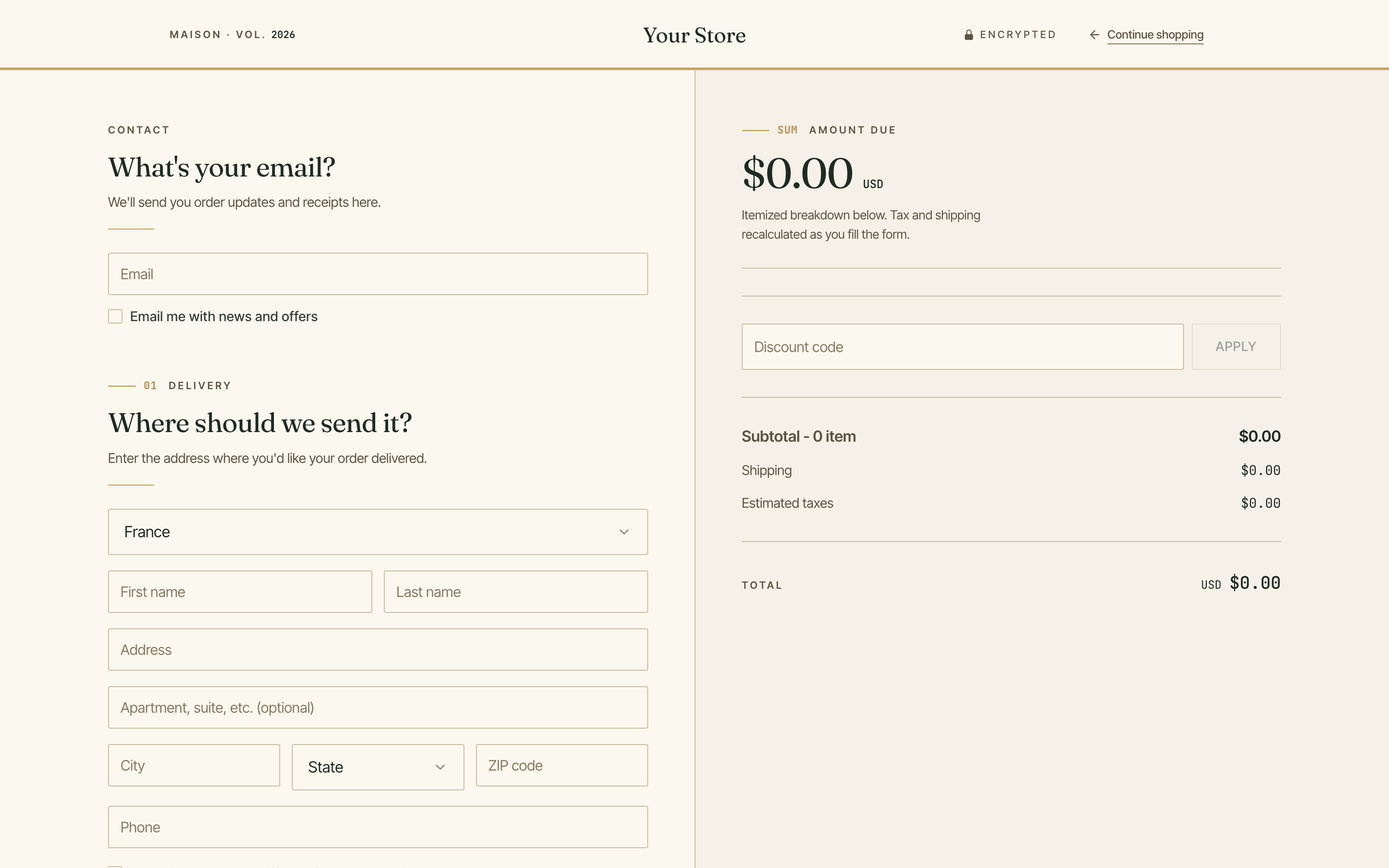
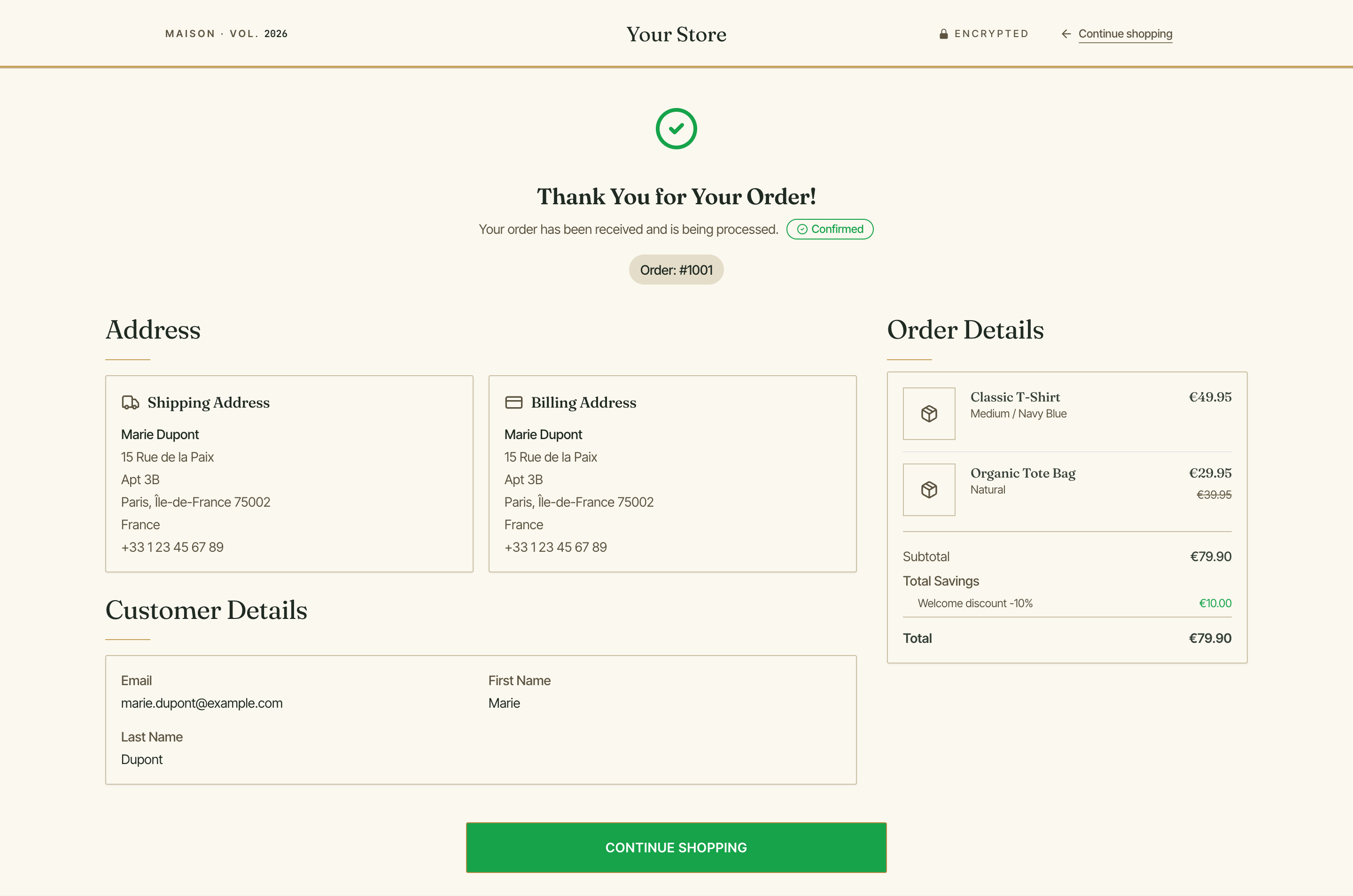
 [**Source →** `simple-checkout-style-luxe`](https://github.com/TagadaPay/plugins/tree/main/simple-checkout-style-luxe)
Quiet-luxury aesthetic — ivory cream background, serif display, amber-gold accents, gentle motion.
Designed for beauty, skincare, and premium lifestyle brands.
[**Source →** `simple-checkout-style-luxe`](https://github.com/TagadaPay/plugins/tree/main/simple-checkout-style-luxe)
Quiet-luxury aesthetic — ivory cream background, serif display, amber-gold accents, gentle motion.
Designed for beauty, skincare, and premium lifestyle brands.
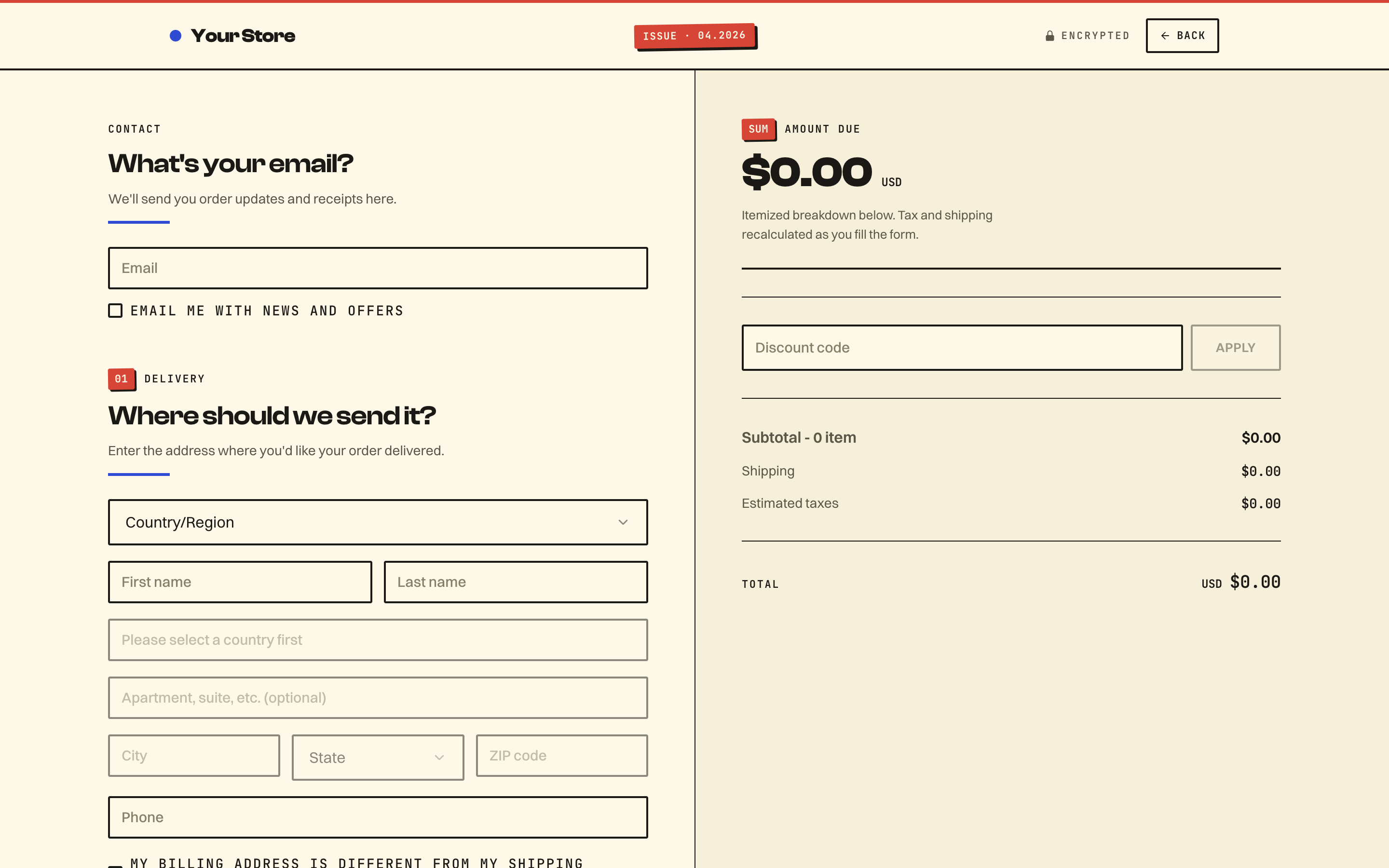
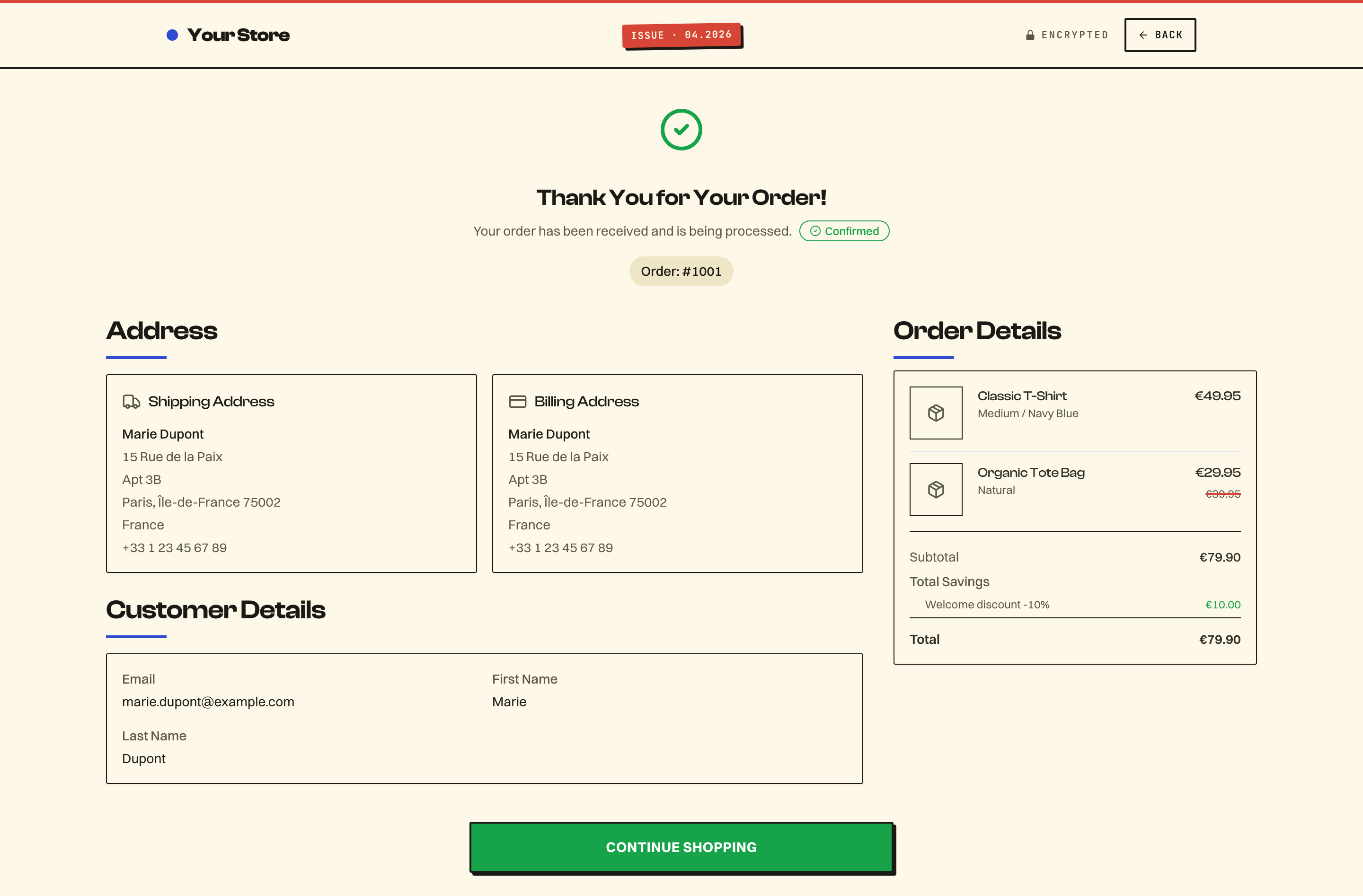
 [**Source →** `simple-checkout-style-solar`](https://github.com/TagadaPay/plugins/tree/main/simple-checkout-style-solar)
Sunny zine energy — warm butter and peach palette, tight display type, playful but functional.
Works for food, wellness, home goods, and indie brands.
[**Source →** `simple-checkout-style-solar`](https://github.com/TagadaPay/plugins/tree/main/simple-checkout-style-solar)
Sunny zine energy — warm butter and peach palette, tight display type, playful but functional.
Works for food, wellness, home goods, and indie brands.
 [**Source →** `simple-checkout-style-arcade`](https://github.com/TagadaPay/plugins/tree/main/simple-checkout-style-arcade)
Candy-Y2K nostalgia — lilac pastels, gradient divider lines, pulsing LIVE chip, chunky mono type.
Tailored to gaming, digital collectibles, and early-web revival brands.
[**Source →** `simple-checkout-style-arcade`](https://github.com/TagadaPay/plugins/tree/main/simple-checkout-style-arcade)
Candy-Y2K nostalgia — lilac pastels, gradient divider lines, pulsing LIVE chip, chunky mono type.
Tailored to gaming, digital collectibles, and early-web revival brands.
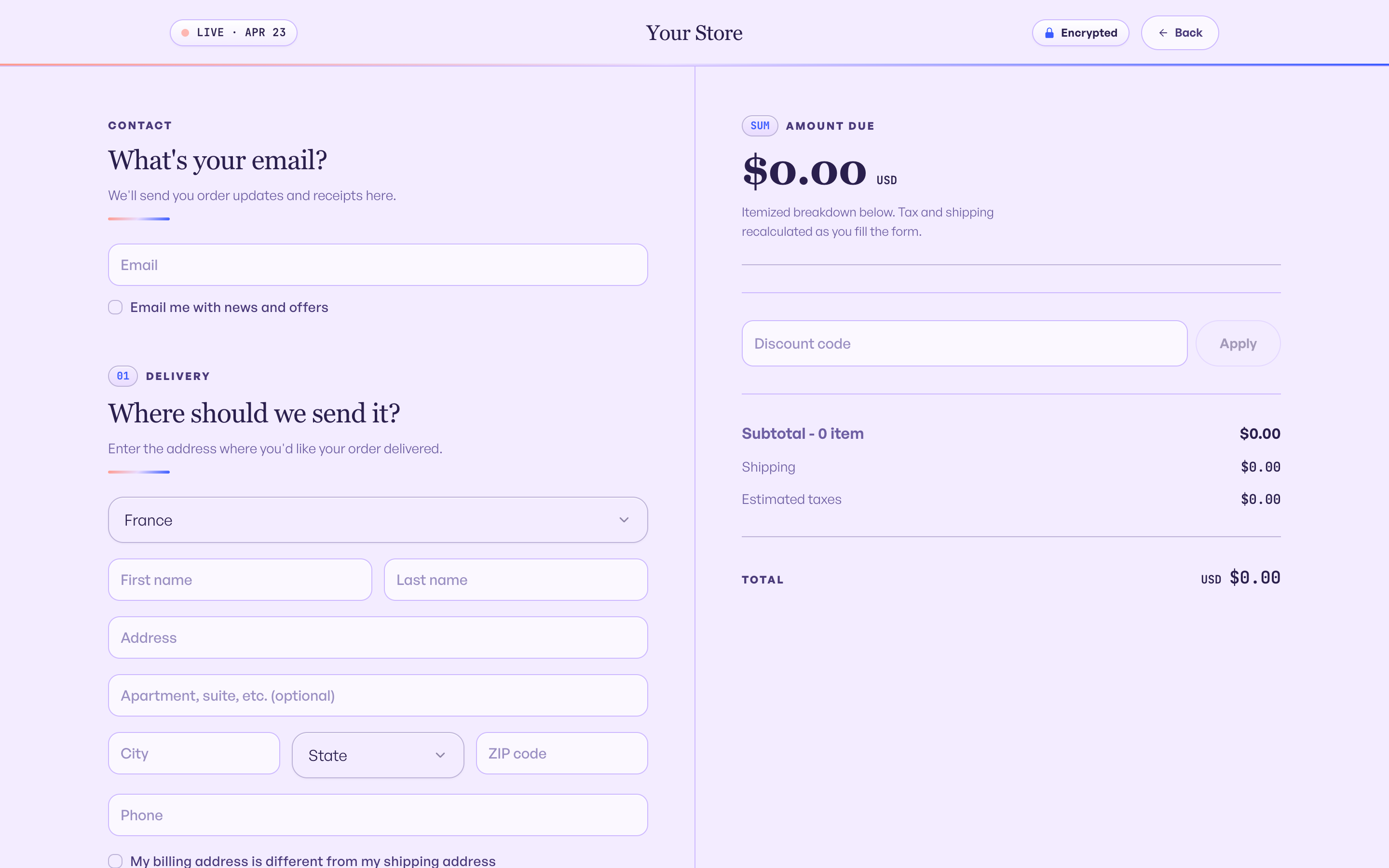
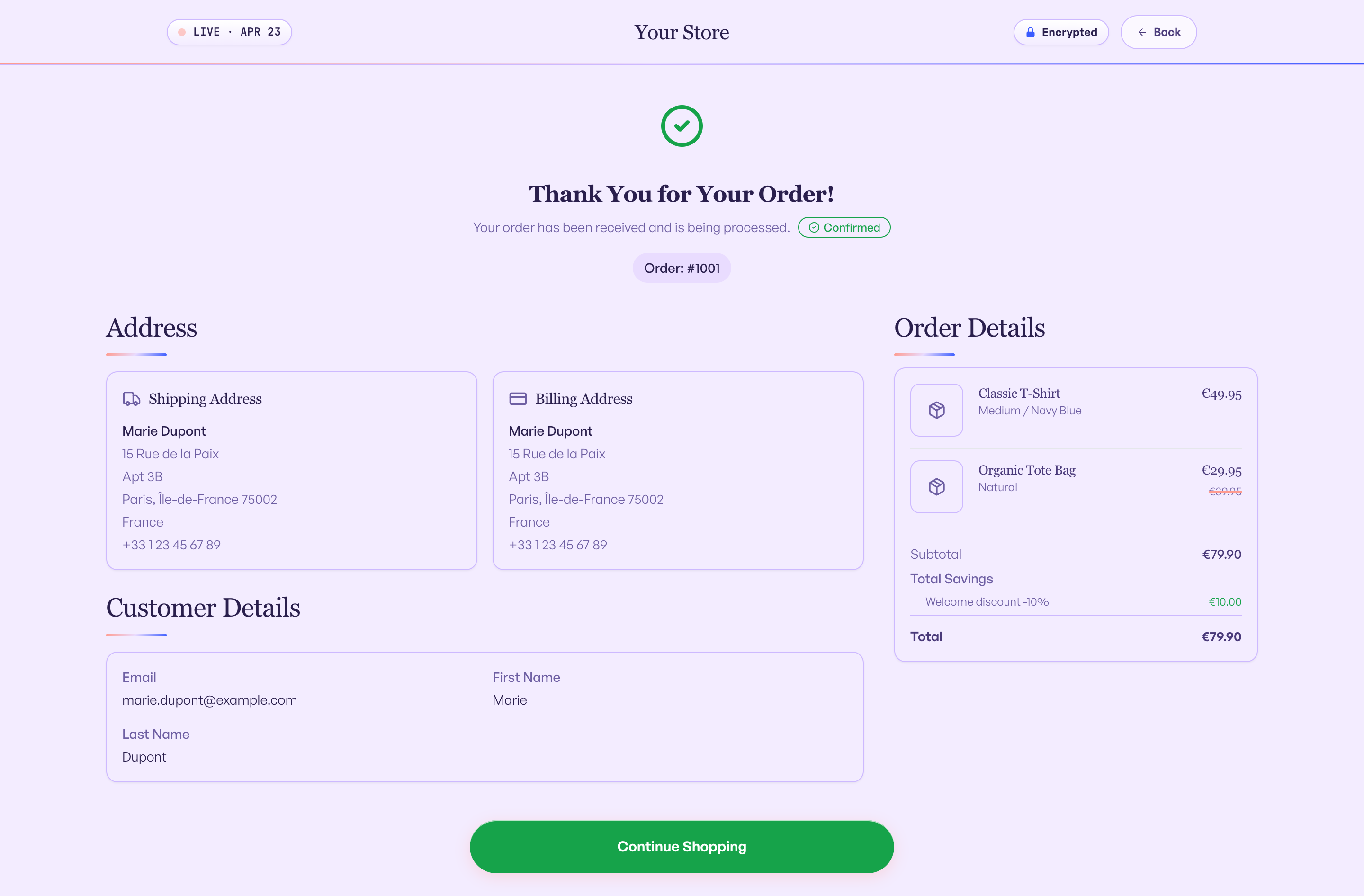 Every variant implements the **exact same checkout and thank-you behavior** (mirroring our native `native-checkout` template). The only thing that changes between them is the design token layer: CSS variables, fonts, shadows, radii, motion — all driven through `src/index.css` and a few signature components (`TopBar`, `Button`, `SectionHeader`).
***
## Anatomy of a Plugin (shared across all five)
Every example follows the same skeleton, so once you understand one, you understand all five:
```
simple-checkout-style-/
├─ plugin.manifest.json # pages, features, requirements
├─ config/
│ ├─ schema.json # strongly-typed config shape
│ └─ default.config.json # defaults merchants can override
├─ src/
│ ├─ App.tsx # wouter routing + SDK matchRoute
│ ├─ pages/
│ │ ├─ CheckoutPage.tsx # uses
│ │ └─ ThankYouPage.tsx # routes to the full ThankYou tree
│ ├─ components/
│ │ ├─ SingleStepCheckout.tsx # orchestrates address/payment/summary
│ │ ├─ ThankYouPage.tsx # full thank-you UI (mirrors native-checkout)
│ │ ├─ ThankYouHeader.tsx
│ │ ├─ TopBar.tsx # ← signature per-variant
│ │ ├─ OrderSummary.tsx
│ │ └─ ui/ # shadcn primitives (button, input, etc.)
│ ├─ data/
│ │ └─ mockOrder.ts # drives /thankyou/preview in local dev
│ ├─ hooks/
│ │ └─ usePageMetadata.ts # title, favicon, OpenGraph per page
│ └─ index.css # ← variant-specific design tokens
└─ README.md
```
All five plugins import these from `@tagadapay/plugin-sdk/v2`:
* **Routing / funnel** — `matchRoute`, `useFunnel`, `isDraftMode`
* **Data hooks** — `useCheckout`, `useOrder`, `useCurrency`, `useISOData`, `usePluginConfig`
* **Payment** — Stripe/Airwallex/HiPay/NMI method renderers, 3DS flow, Zelle/custom-payment handlers
* **Tracking** — `usePixelTracking` (Meta, TikTok, GA, etc.)
* **i18n** — `useTranslation` with merchant-supplied locales
* **Preview** — Draft-mode rendering for the CRM's live preview iframe
In other words: the plugin owns **the UI and the story** — the SDK owns the wiring.
***
## How to Use These Examples
```bash theme={null}
git clone https://github.com/TagadaPay/plugins.git
cd plugins
pnpm install
```
```bash theme={null}
cd simple-checkout-style-luxe # or editorial / neon / solar / arcade
pnpm dev
```
Vite boots on `http://localhost:5173/checkout` by default.
Navigate to `/thankyou/preview` to see the thank-you page with mock data.
Most brand adjustments happen in **two files**:
* `src/index.css` — design tokens (colors, radii, fonts, motion)
* `src/components/TopBar.tsx` — the signature header strip
A minimal rebrand (swap palette + logo) is typically \<100 lines of diff.
```bash theme={null}
pnpm build
tgd deploy # via @tagadapay/plugin-cli
```
See the [Plugin CLI docs](/developer-tools/cli/introduction) for credentials and deploy targets.
***
## FAQ
Yes. The entire [`TagadaPay/plugins`](https://github.com/TagadaPay/plugins) repo is MIT-licensed.
You can fork, modify, rebrand, and deploy it commercially with zero attribution required
(attribution is always appreciated though).
Because real brands need more than palette swaps. Each variant rewires motion curves,
typographic rhythm, TopBar behavior, order-summary density, and micro-copy —
the things that make a checkout feel *on-brand* vs *generic-with-custom-colors*.
Having five distinct aesthetics gives you five working references instead of one design +
four theoretical alternatives.
Absolutely — PRs welcome. The contribution guide is in the repo's root `README.md`.
If your variant targets an underserved vertical (gaming, B2B, SaaS checkout, donation forms),
we'll likely feature it here.
The [Headless SDK examples](https://github.com/TagadaPay/examples-sdk) target a different
use case: calling TagadaPay from **your own frontend** (Shopify theme, Next.js site, etc.).
The Plugin SDK examples on this page are **full hosted experiences** — TagadaPay serves
them on the customer's checkout URL; you own the code.
If you already have a storefront and just need checkout creation + pixels → Headless SDK.
If you want a new custom checkout/upsell/thank-you flow → Plugin SDK (these examples).
Yes — every image on this page is served from the repo's `screenshots/` folder via
`raw.githubusercontent.com`. When a maintainer updates a variant, the image here updates too.
***
## Next Steps
Step-by-step walkthrough if you want to build from scratch instead of forking.
Full reference for `plugin.manifest.json` — pages, features, requirements.
Every hook exposed by `@tagadapay/plugin-sdk/v2`.
`tgd deploy`, environments, and release channels.
Every variant implements the **exact same checkout and thank-you behavior** (mirroring our native `native-checkout` template). The only thing that changes between them is the design token layer: CSS variables, fonts, shadows, radii, motion — all driven through `src/index.css` and a few signature components (`TopBar`, `Button`, `SectionHeader`).
***
## Anatomy of a Plugin (shared across all five)
Every example follows the same skeleton, so once you understand one, you understand all five:
```
simple-checkout-style-/
├─ plugin.manifest.json # pages, features, requirements
├─ config/
│ ├─ schema.json # strongly-typed config shape
│ └─ default.config.json # defaults merchants can override
├─ src/
│ ├─ App.tsx # wouter routing + SDK matchRoute
│ ├─ pages/
│ │ ├─ CheckoutPage.tsx # uses
│ │ └─ ThankYouPage.tsx # routes to the full ThankYou tree
│ ├─ components/
│ │ ├─ SingleStepCheckout.tsx # orchestrates address/payment/summary
│ │ ├─ ThankYouPage.tsx # full thank-you UI (mirrors native-checkout)
│ │ ├─ ThankYouHeader.tsx
│ │ ├─ TopBar.tsx # ← signature per-variant
│ │ ├─ OrderSummary.tsx
│ │ └─ ui/ # shadcn primitives (button, input, etc.)
│ ├─ data/
│ │ └─ mockOrder.ts # drives /thankyou/preview in local dev
│ ├─ hooks/
│ │ └─ usePageMetadata.ts # title, favicon, OpenGraph per page
│ └─ index.css # ← variant-specific design tokens
└─ README.md
```
All five plugins import these from `@tagadapay/plugin-sdk/v2`:
* **Routing / funnel** — `matchRoute`, `useFunnel`, `isDraftMode`
* **Data hooks** — `useCheckout`, `useOrder`, `useCurrency`, `useISOData`, `usePluginConfig`
* **Payment** — Stripe/Airwallex/HiPay/NMI method renderers, 3DS flow, Zelle/custom-payment handlers
* **Tracking** — `usePixelTracking` (Meta, TikTok, GA, etc.)
* **i18n** — `useTranslation` with merchant-supplied locales
* **Preview** — Draft-mode rendering for the CRM's live preview iframe
In other words: the plugin owns **the UI and the story** — the SDK owns the wiring.
***
## How to Use These Examples
```bash theme={null}
git clone https://github.com/TagadaPay/plugins.git
cd plugins
pnpm install
```
```bash theme={null}
cd simple-checkout-style-luxe # or editorial / neon / solar / arcade
pnpm dev
```
Vite boots on `http://localhost:5173/checkout` by default.
Navigate to `/thankyou/preview` to see the thank-you page with mock data.
Most brand adjustments happen in **two files**:
* `src/index.css` — design tokens (colors, radii, fonts, motion)
* `src/components/TopBar.tsx` — the signature header strip
A minimal rebrand (swap palette + logo) is typically \<100 lines of diff.
```bash theme={null}
pnpm build
tgd deploy # via @tagadapay/plugin-cli
```
See the [Plugin CLI docs](/developer-tools/cli/introduction) for credentials and deploy targets.
***
## FAQ
Yes. The entire [`TagadaPay/plugins`](https://github.com/TagadaPay/plugins) repo is MIT-licensed.
You can fork, modify, rebrand, and deploy it commercially with zero attribution required
(attribution is always appreciated though).
Because real brands need more than palette swaps. Each variant rewires motion curves,
typographic rhythm, TopBar behavior, order-summary density, and micro-copy —
the things that make a checkout feel *on-brand* vs *generic-with-custom-colors*.
Having five distinct aesthetics gives you five working references instead of one design +
four theoretical alternatives.
Absolutely — PRs welcome. The contribution guide is in the repo's root `README.md`.
If your variant targets an underserved vertical (gaming, B2B, SaaS checkout, donation forms),
we'll likely feature it here.
The [Headless SDK examples](https://github.com/TagadaPay/examples-sdk) target a different
use case: calling TagadaPay from **your own frontend** (Shopify theme, Next.js site, etc.).
The Plugin SDK examples on this page are **full hosted experiences** — TagadaPay serves
them on the customer's checkout URL; you own the code.
If you already have a storefront and just need checkout creation + pixels → Headless SDK.
If you want a new custom checkout/upsell/thank-you flow → Plugin SDK (these examples).
Yes — every image on this page is served from the repo's `screenshots/` folder via
`raw.githubusercontent.com`. When a maintainer updates a variant, the image here updates too.
***
## Next Steps
Step-by-step walkthrough if you want to build from scratch instead of forking.
Full reference for `plugin.manifest.json` — pages, features, requirements.
Every hook exposed by `@tagadapay/plugin-sdk/v2`.
`tgd deploy`, environments, and release channels.